Natural Capital
Establishing Sediment as the Currency of Climate Adaptation
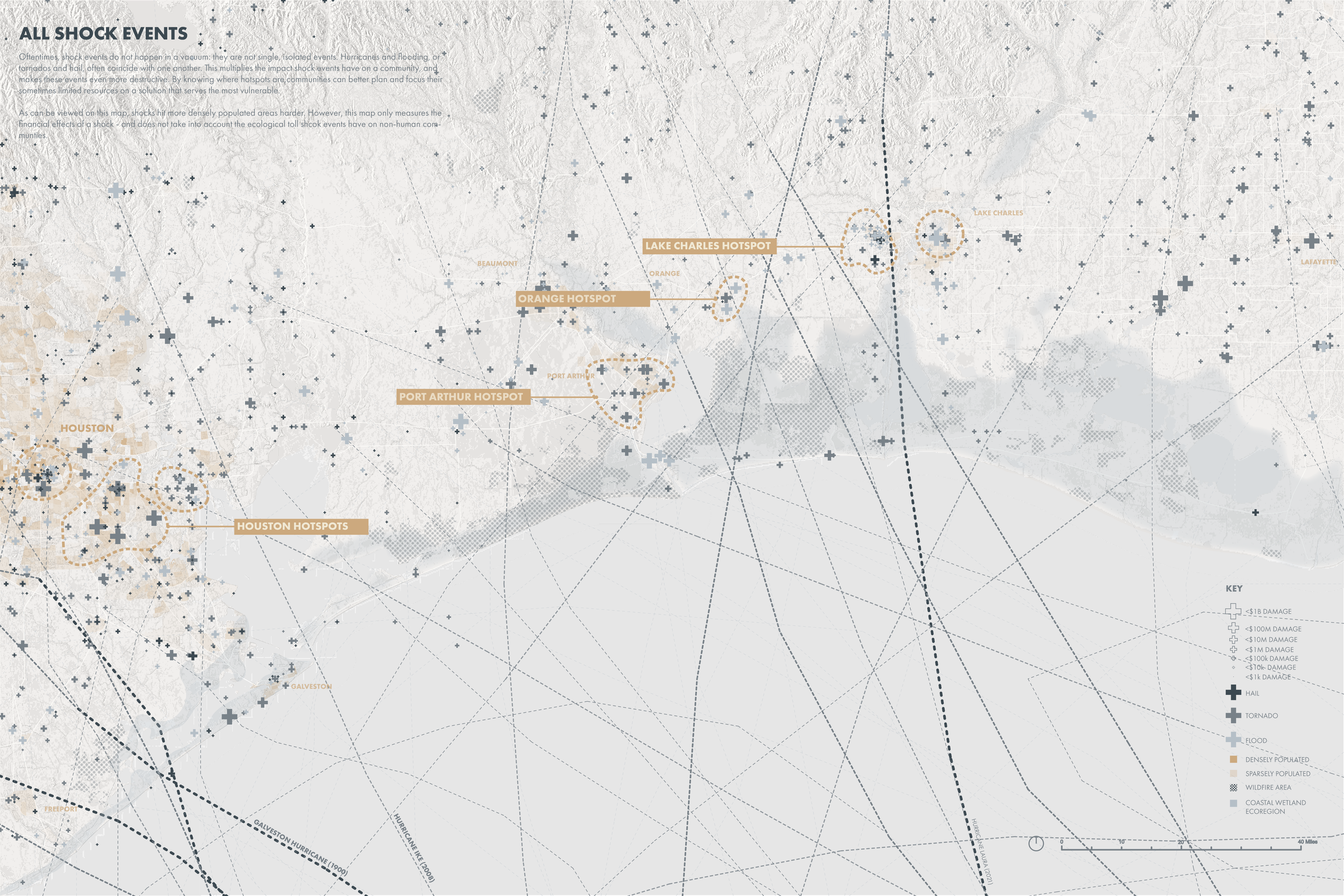
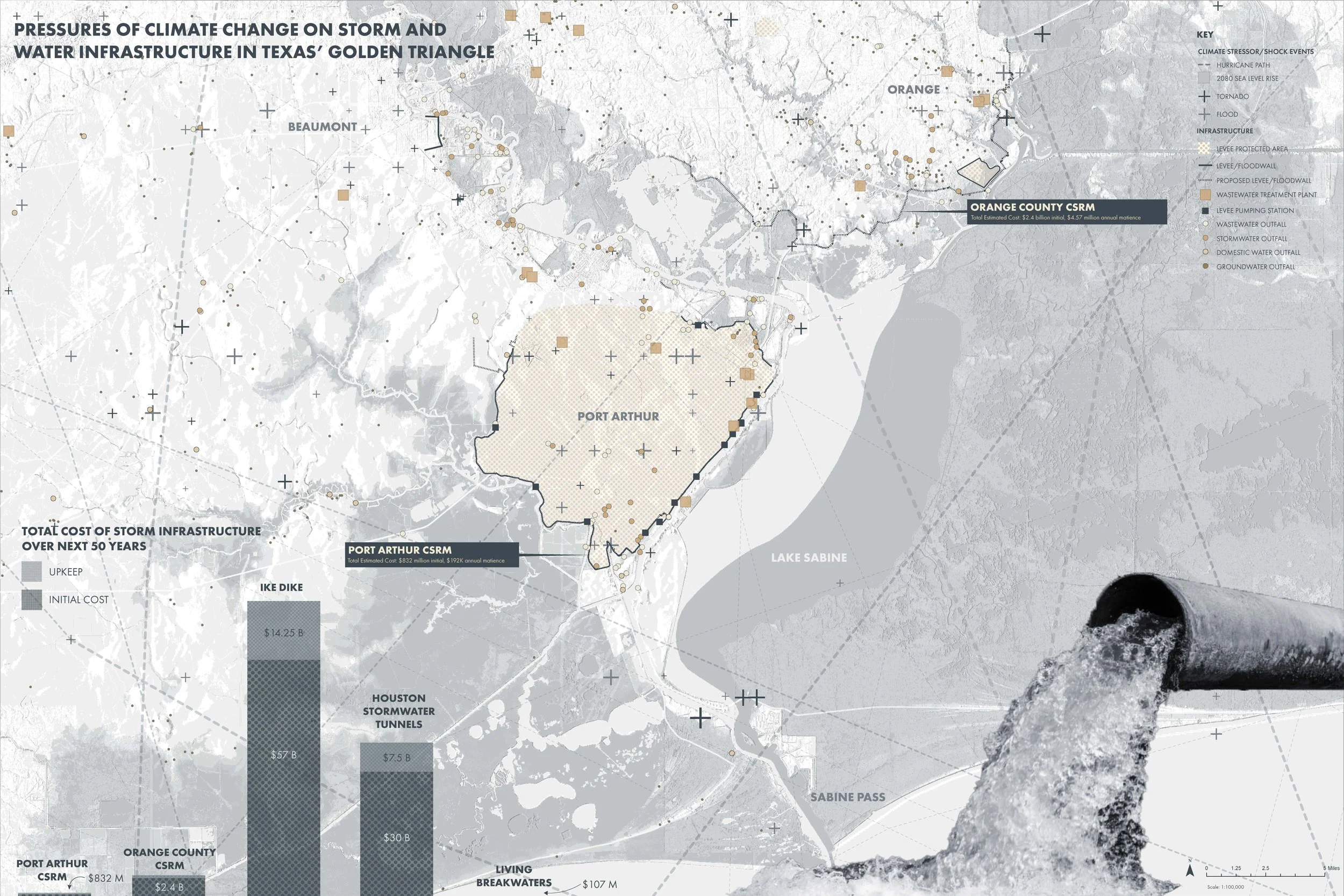
Port Arthur developed along Sabine Lake to capitalize on its access to the Gulf of Mexico and regional waterways, relying on levees, dikes, and channelization to make the landscape habitable and profitable. Over time, this gray infrastructure has aged and degraded, and climate change has intensified the need for larger, more expensive systems. Rising sea levels, eroding shorelines, and increasingly frequent hurricanes have produced massive, single-use interventions that permanently alter the landscape while generating significant environmental and social side effects.
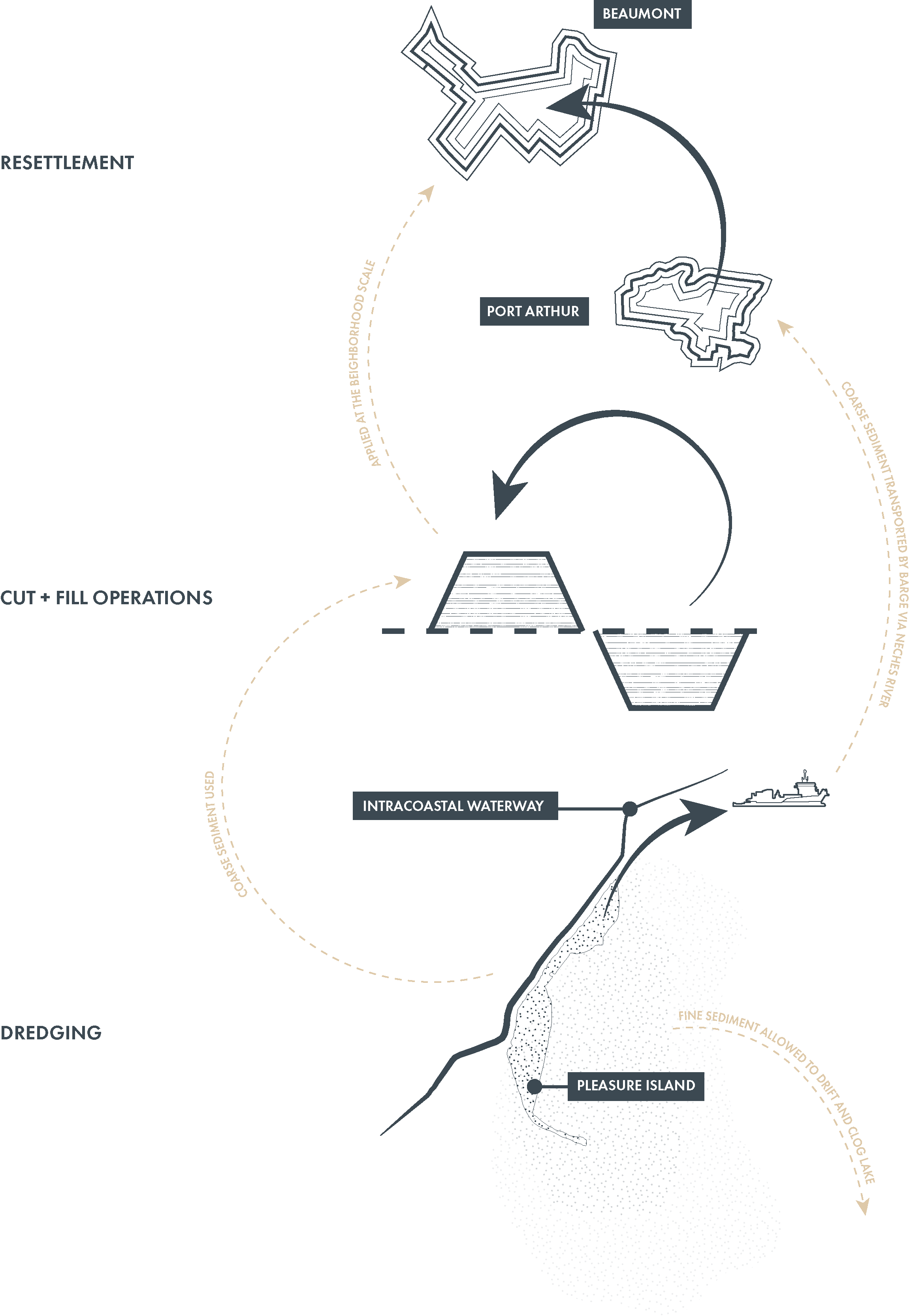
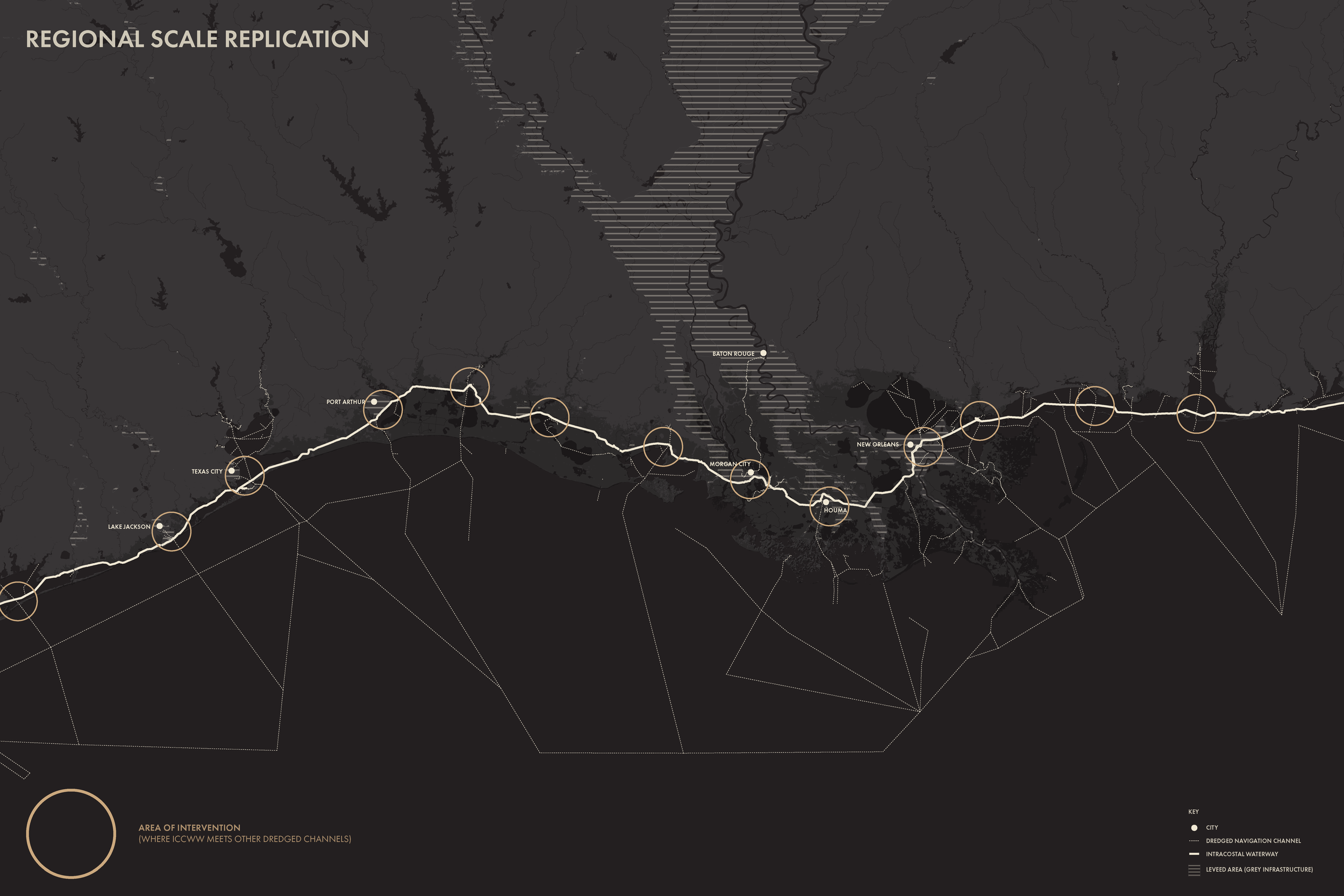
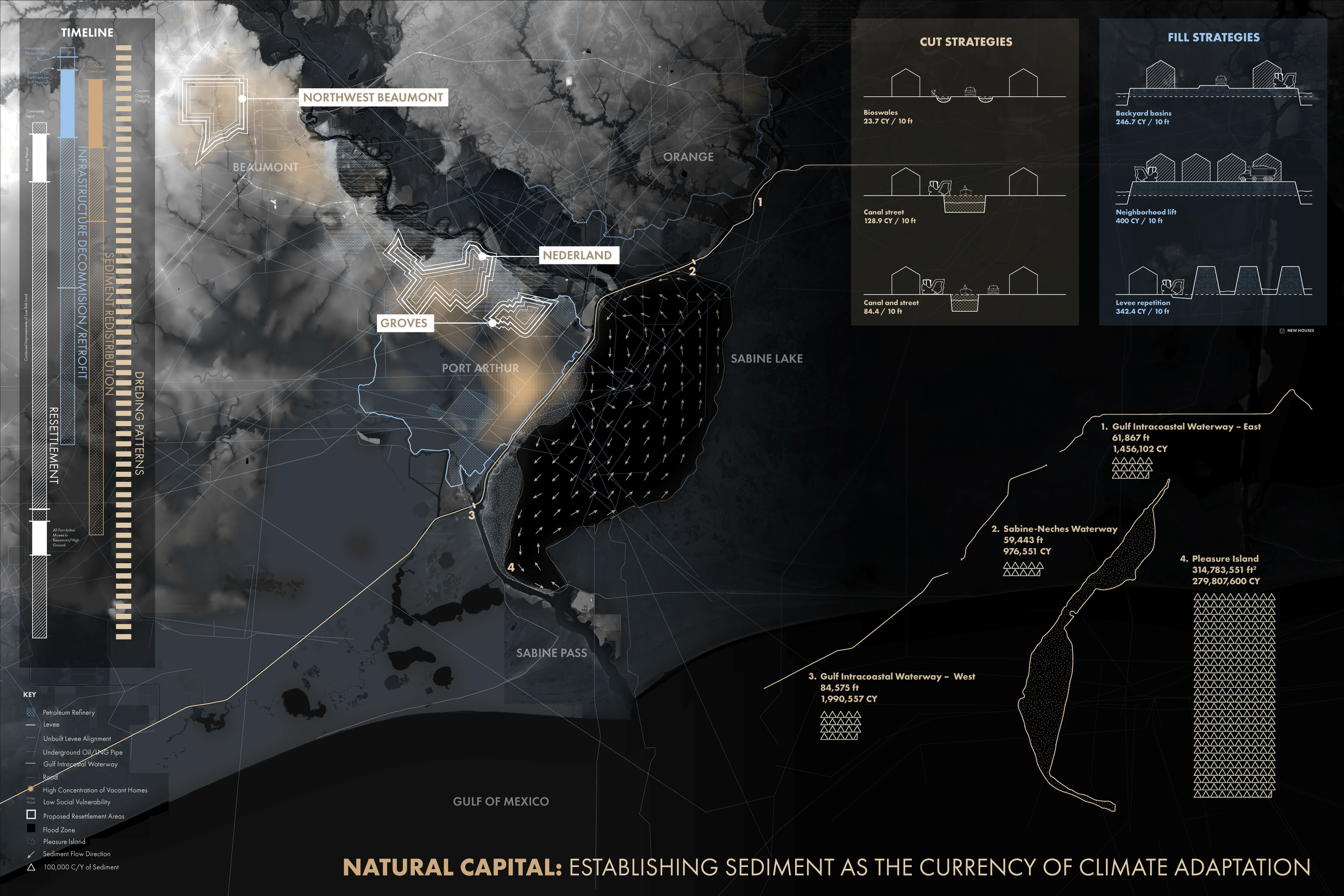
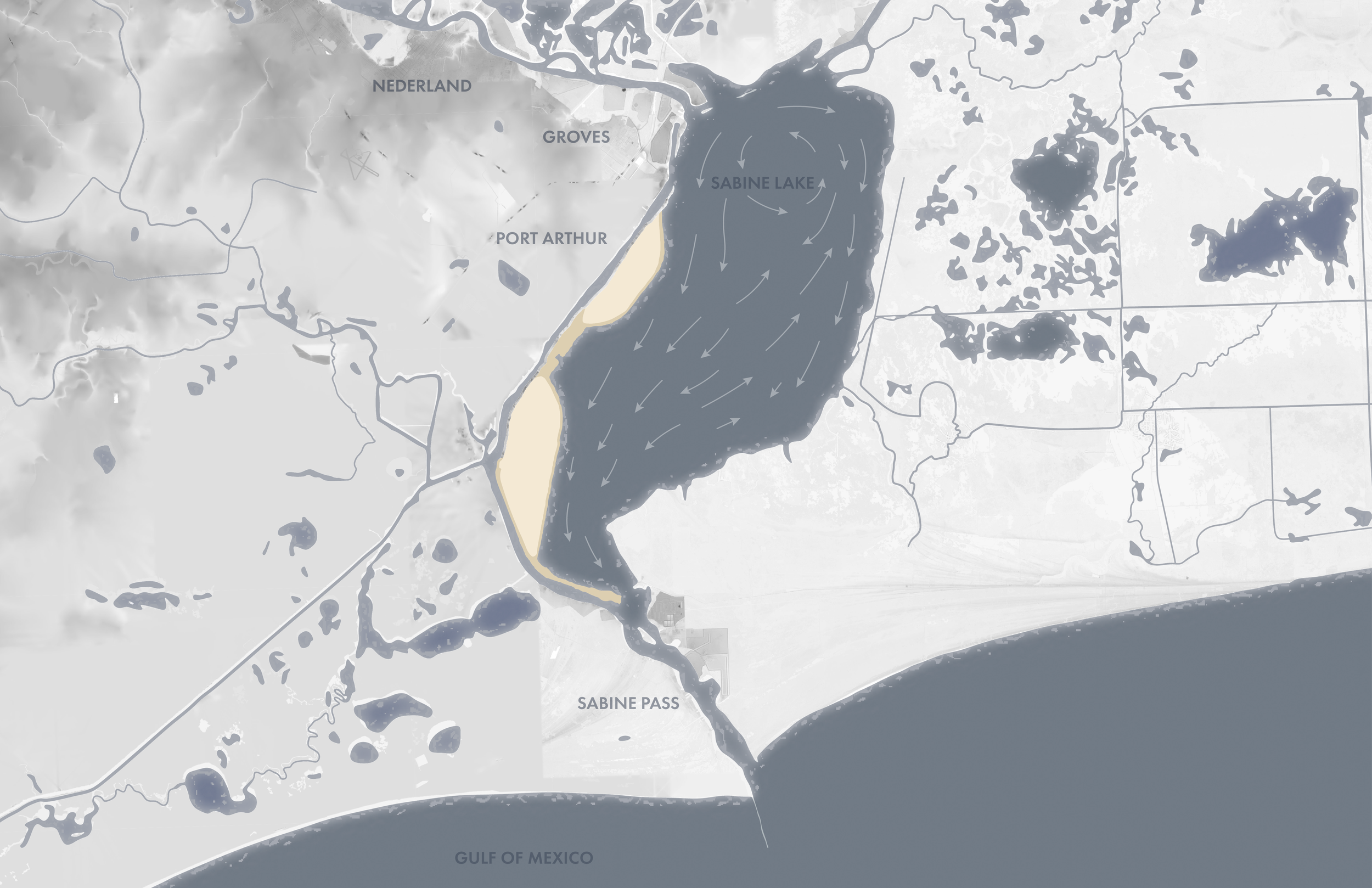
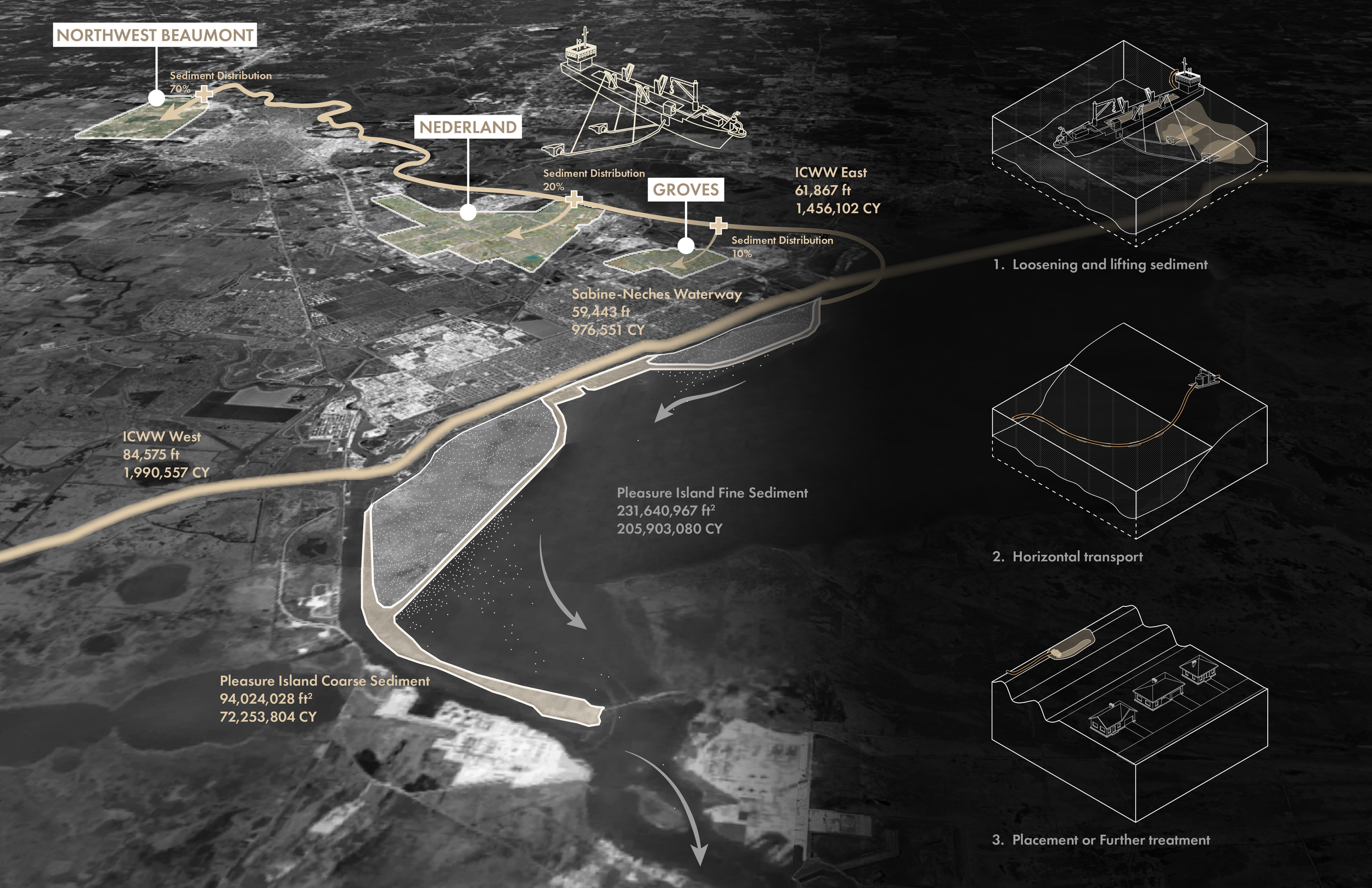
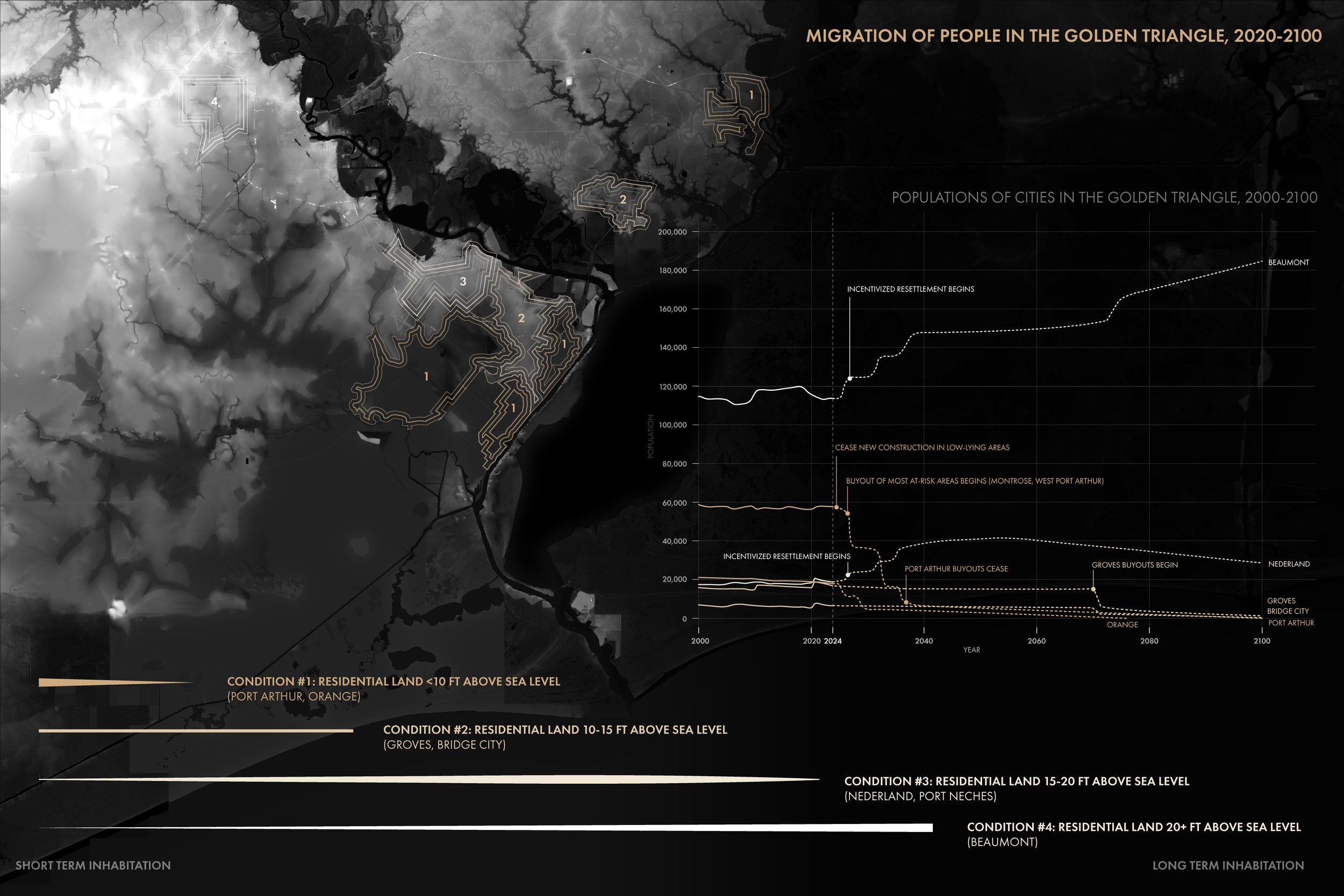
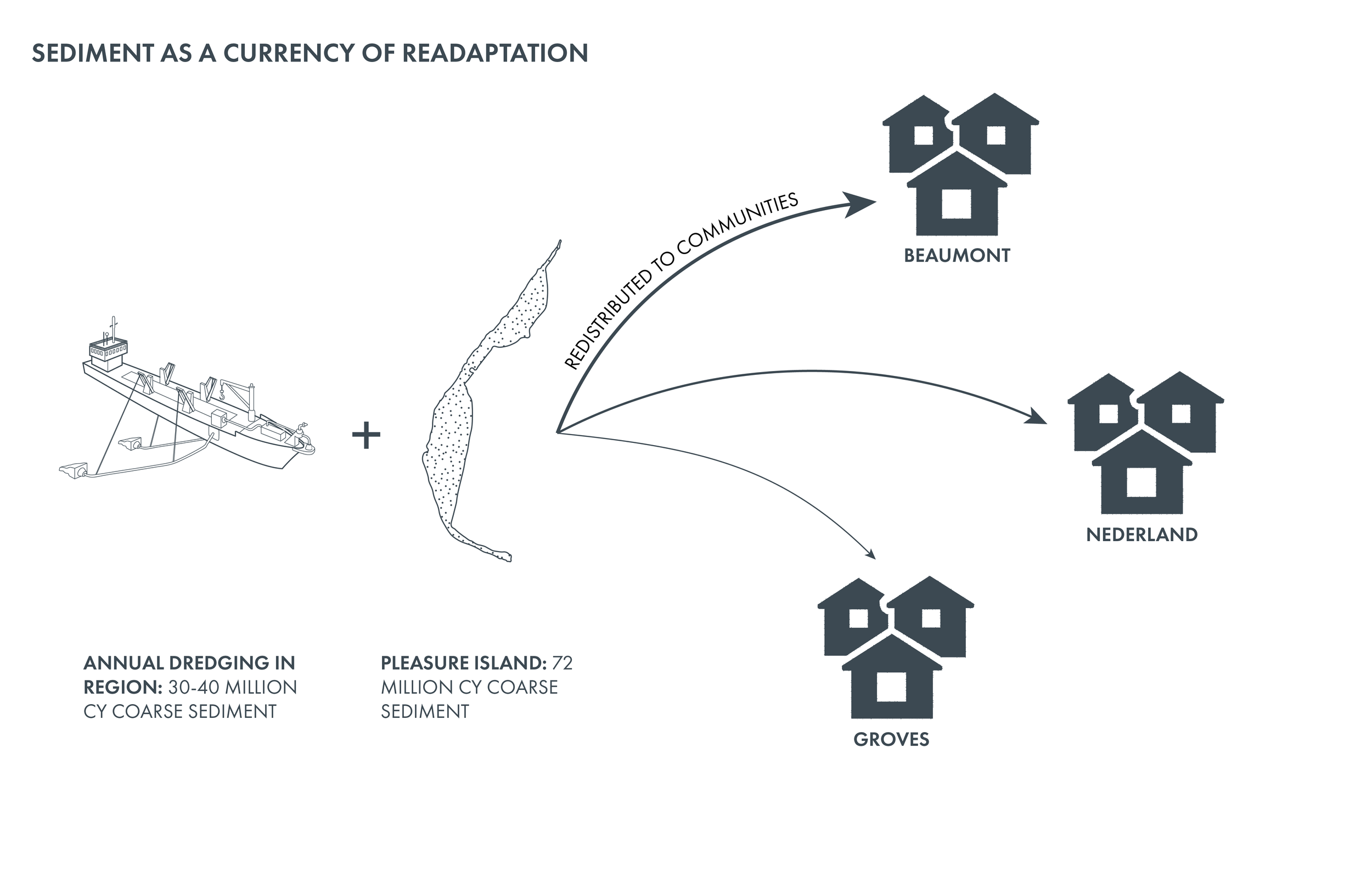
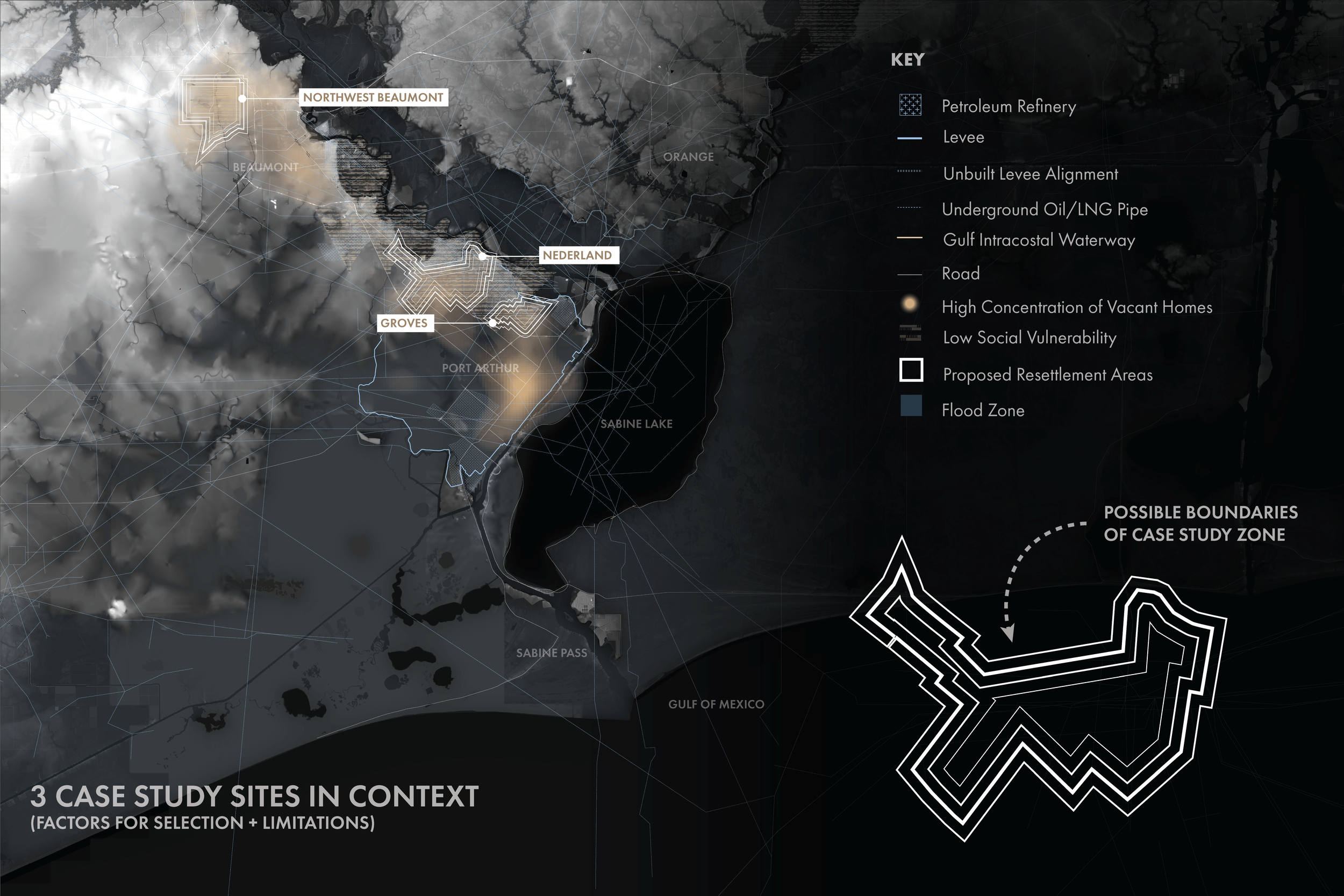
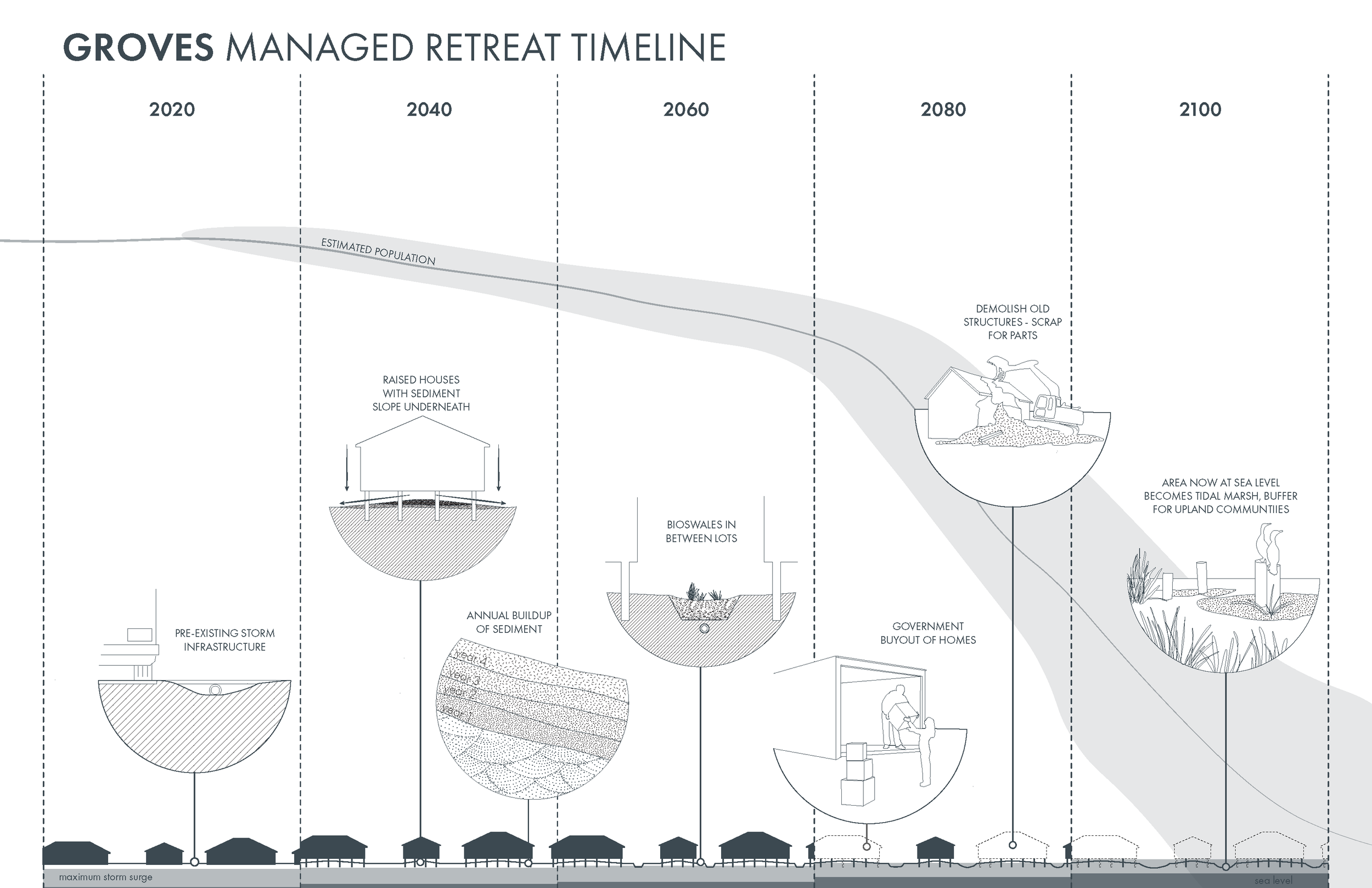
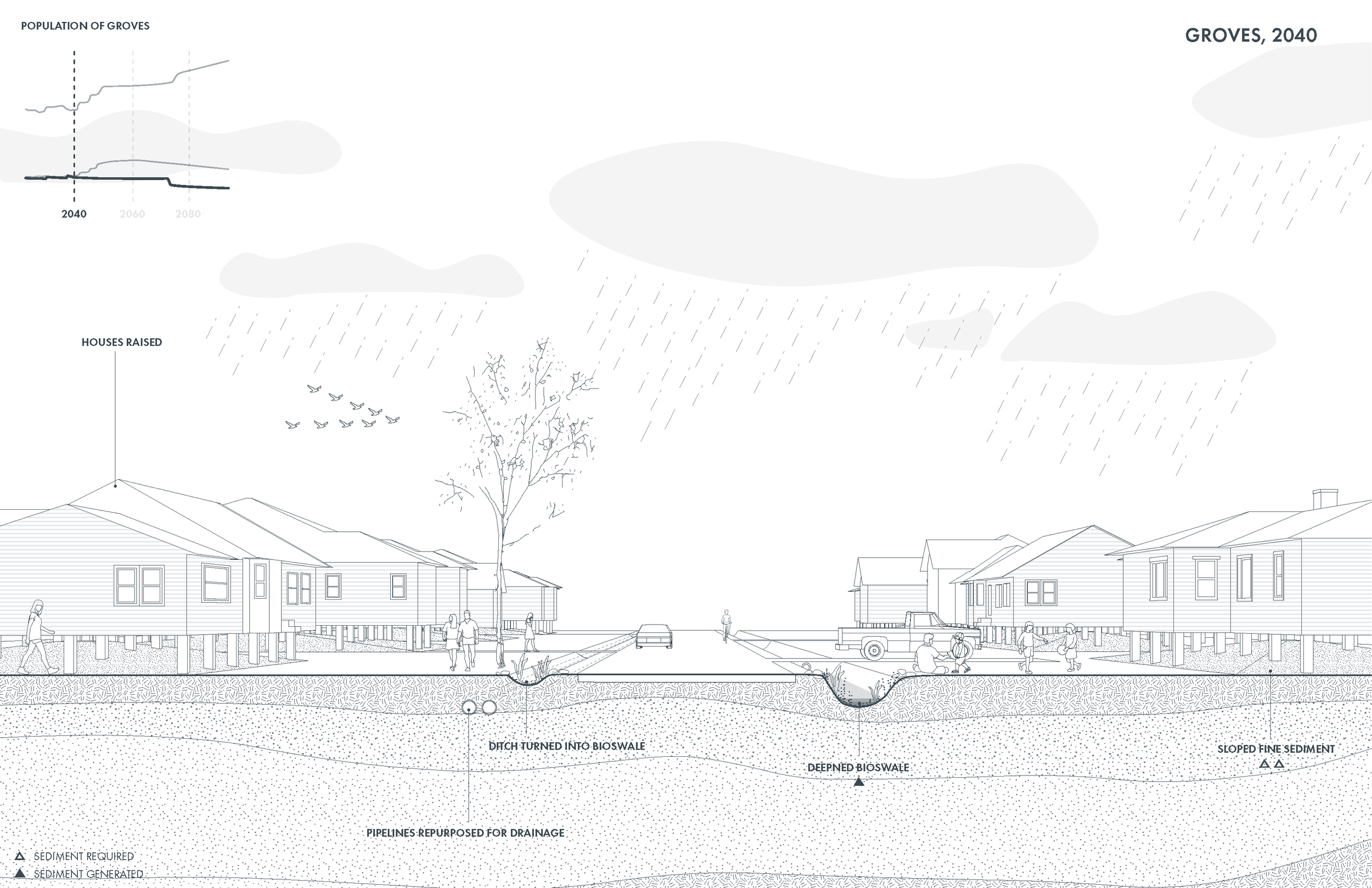
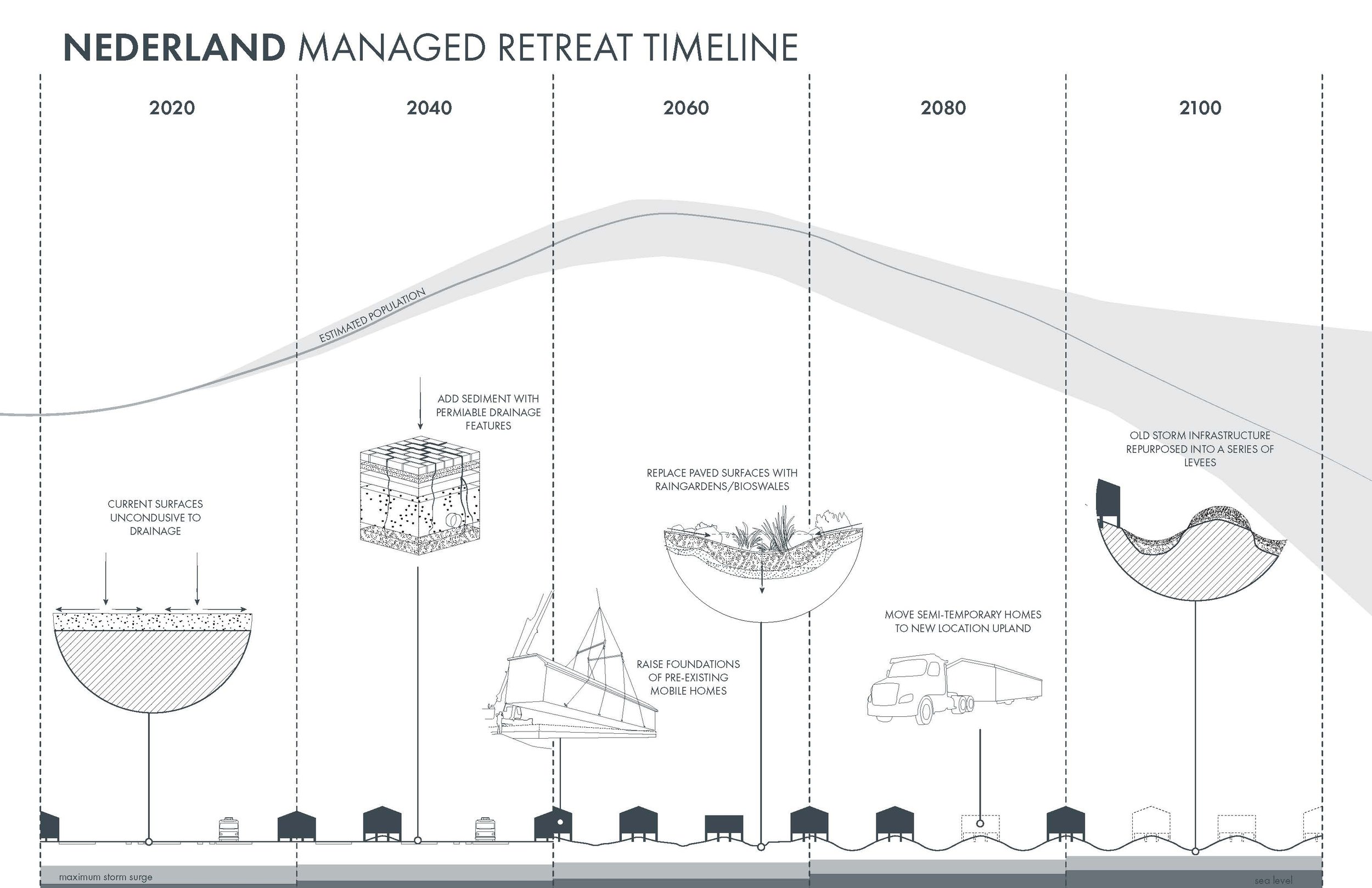
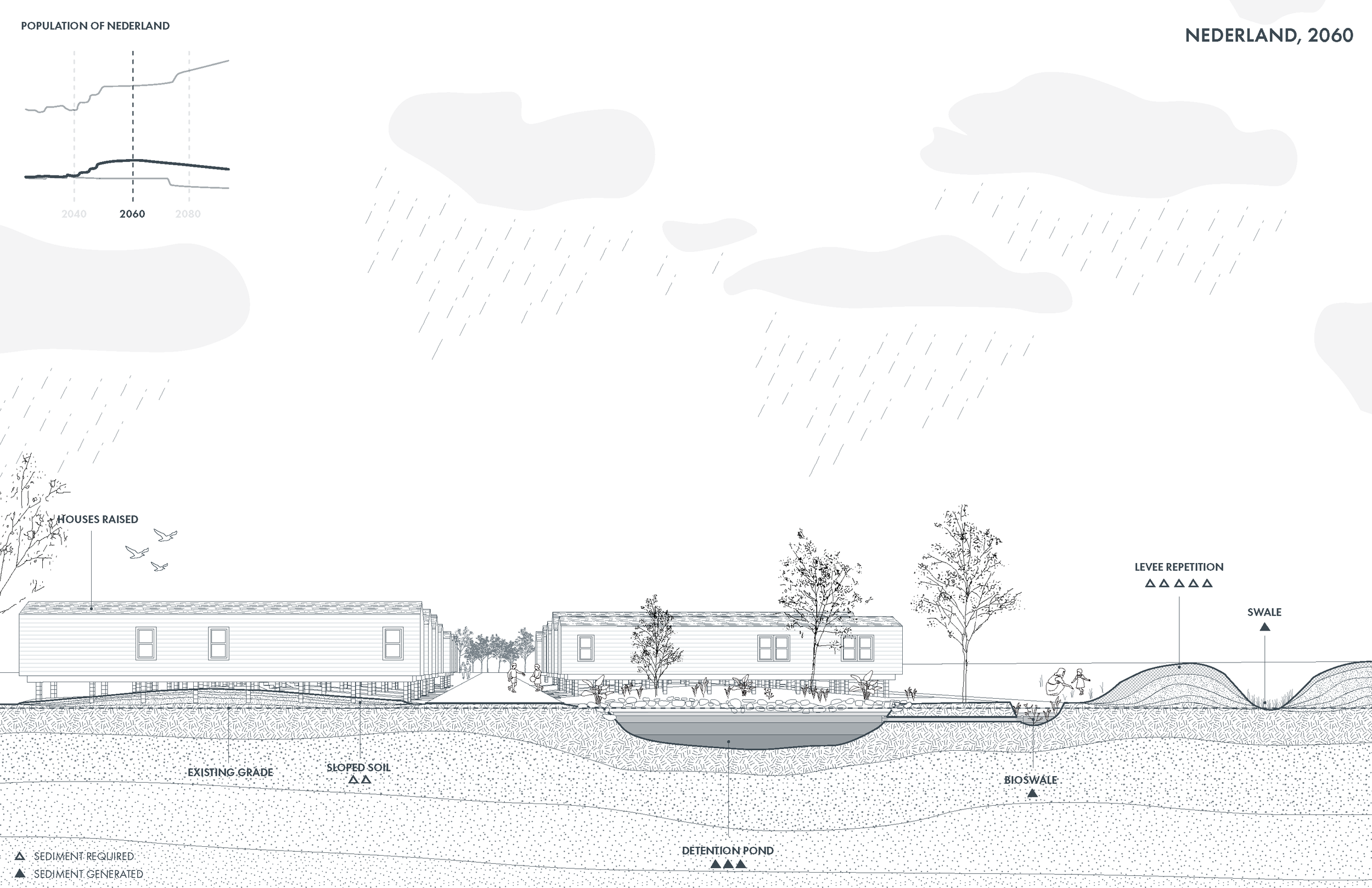
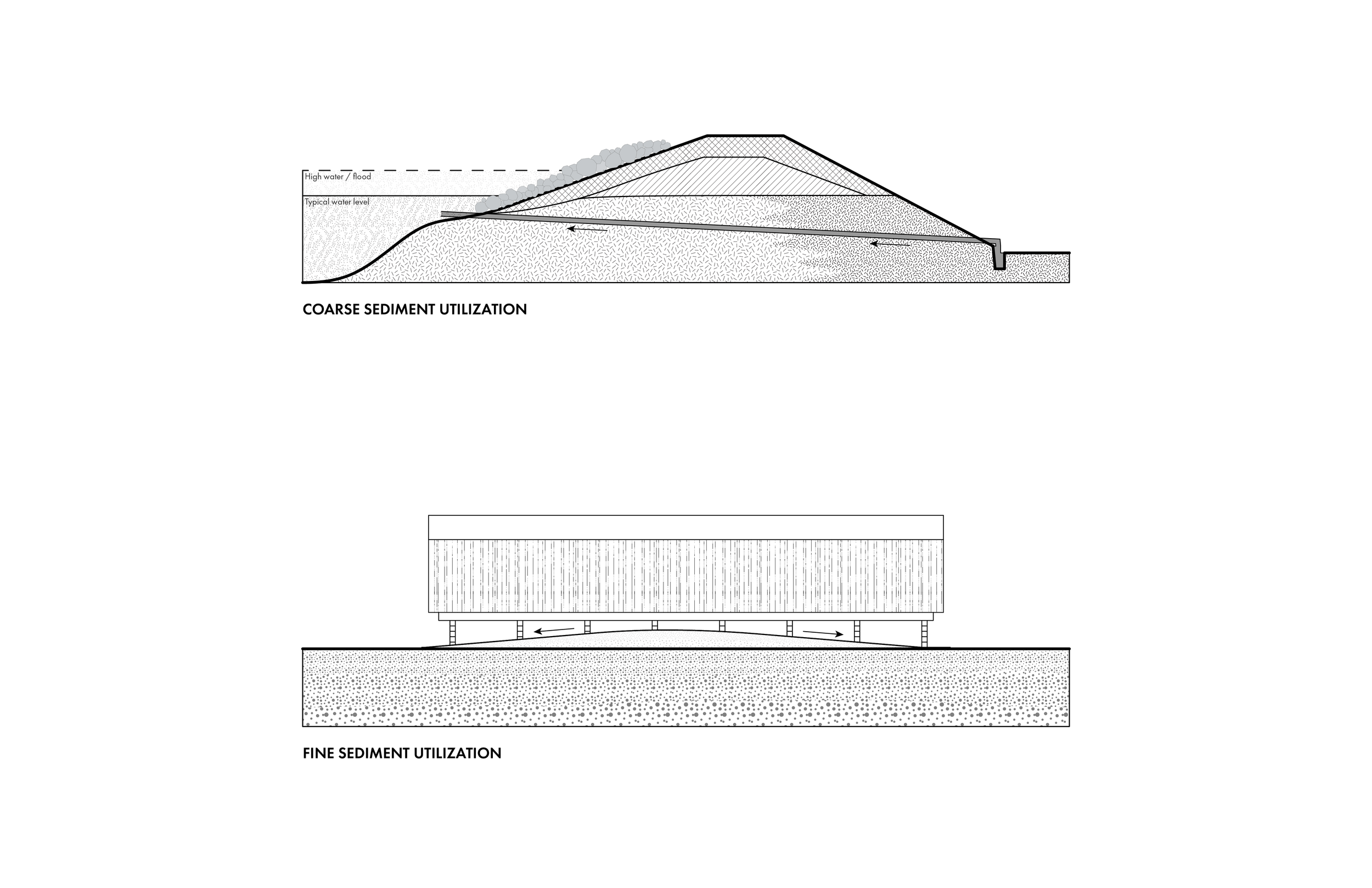
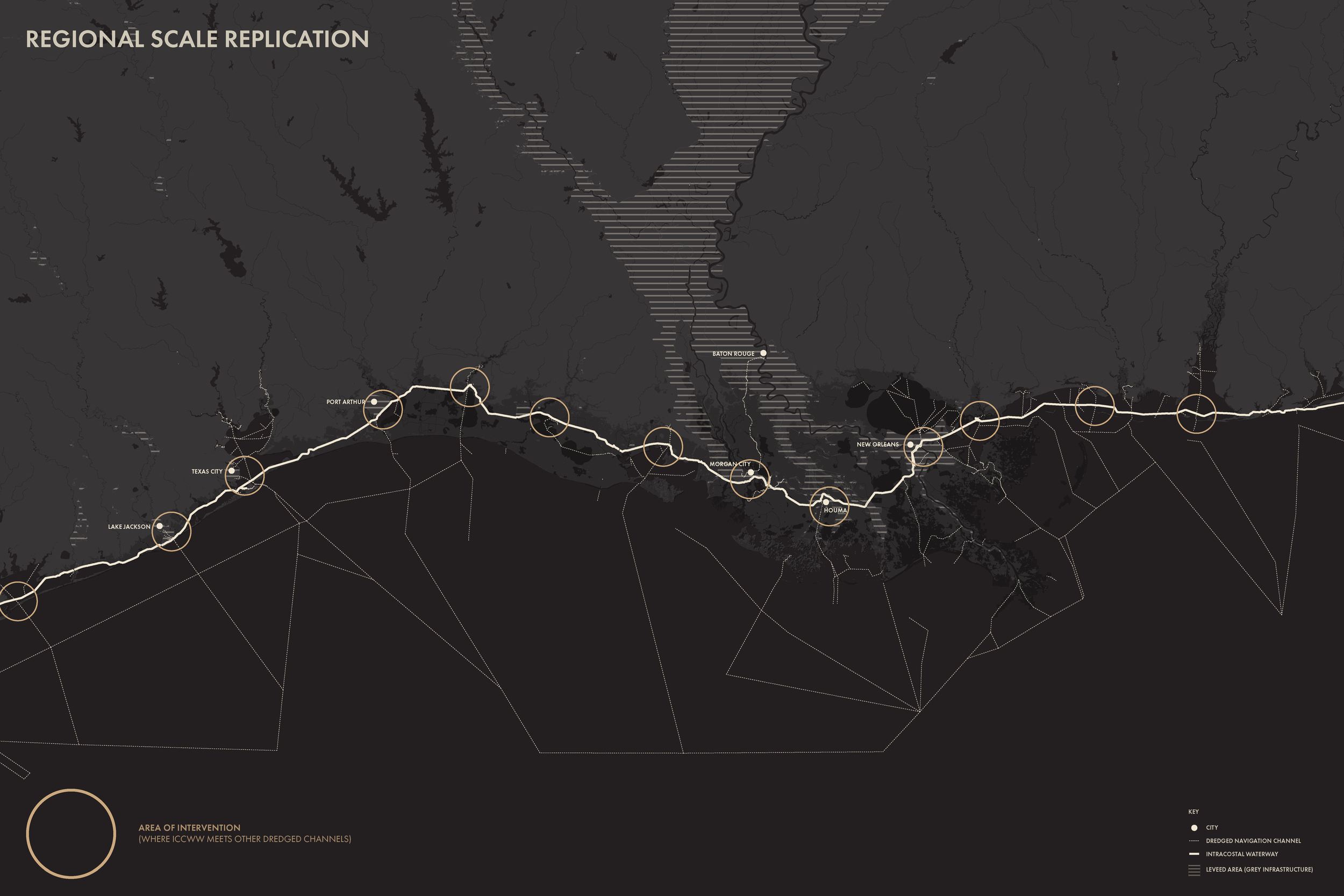
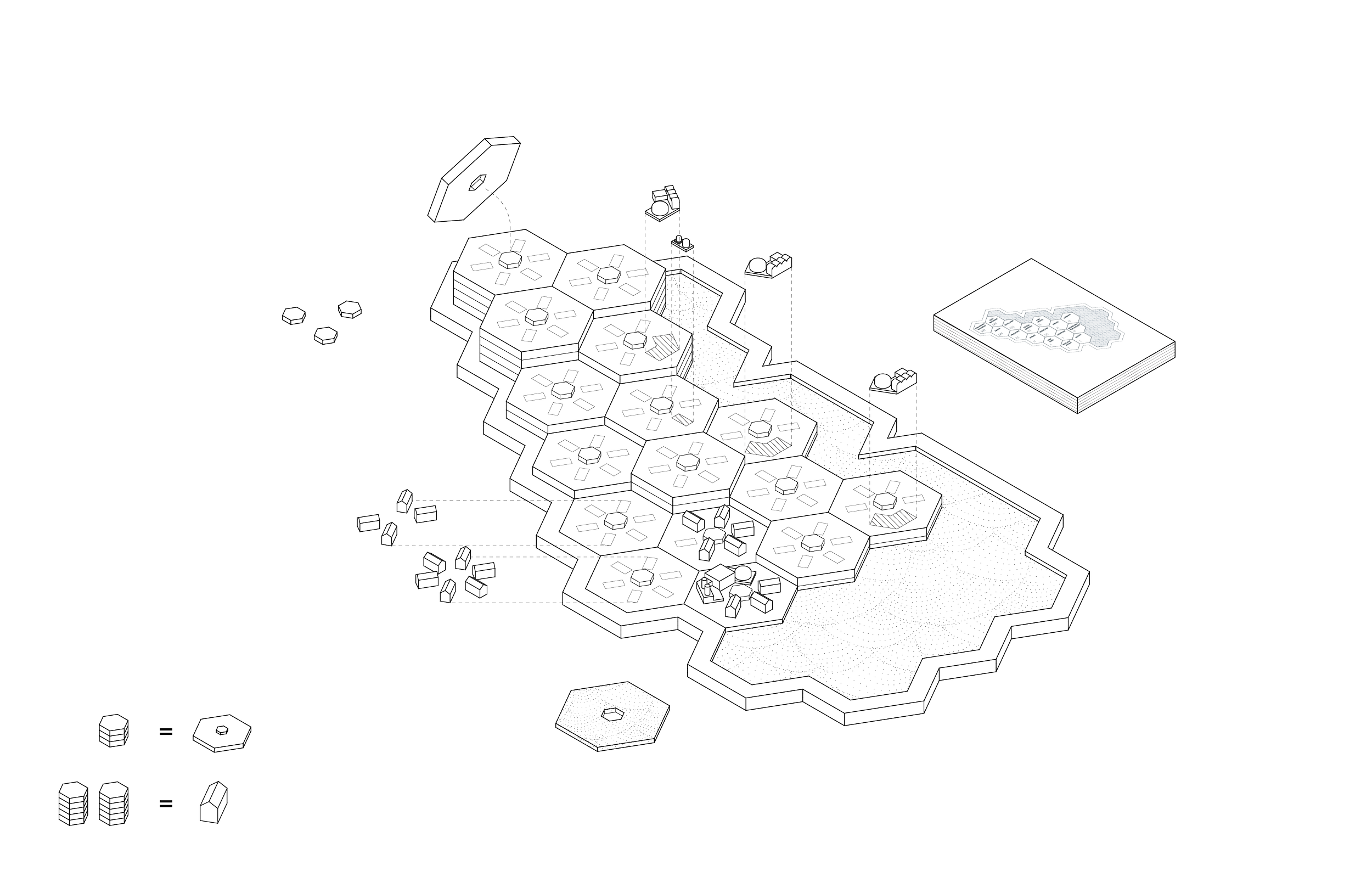
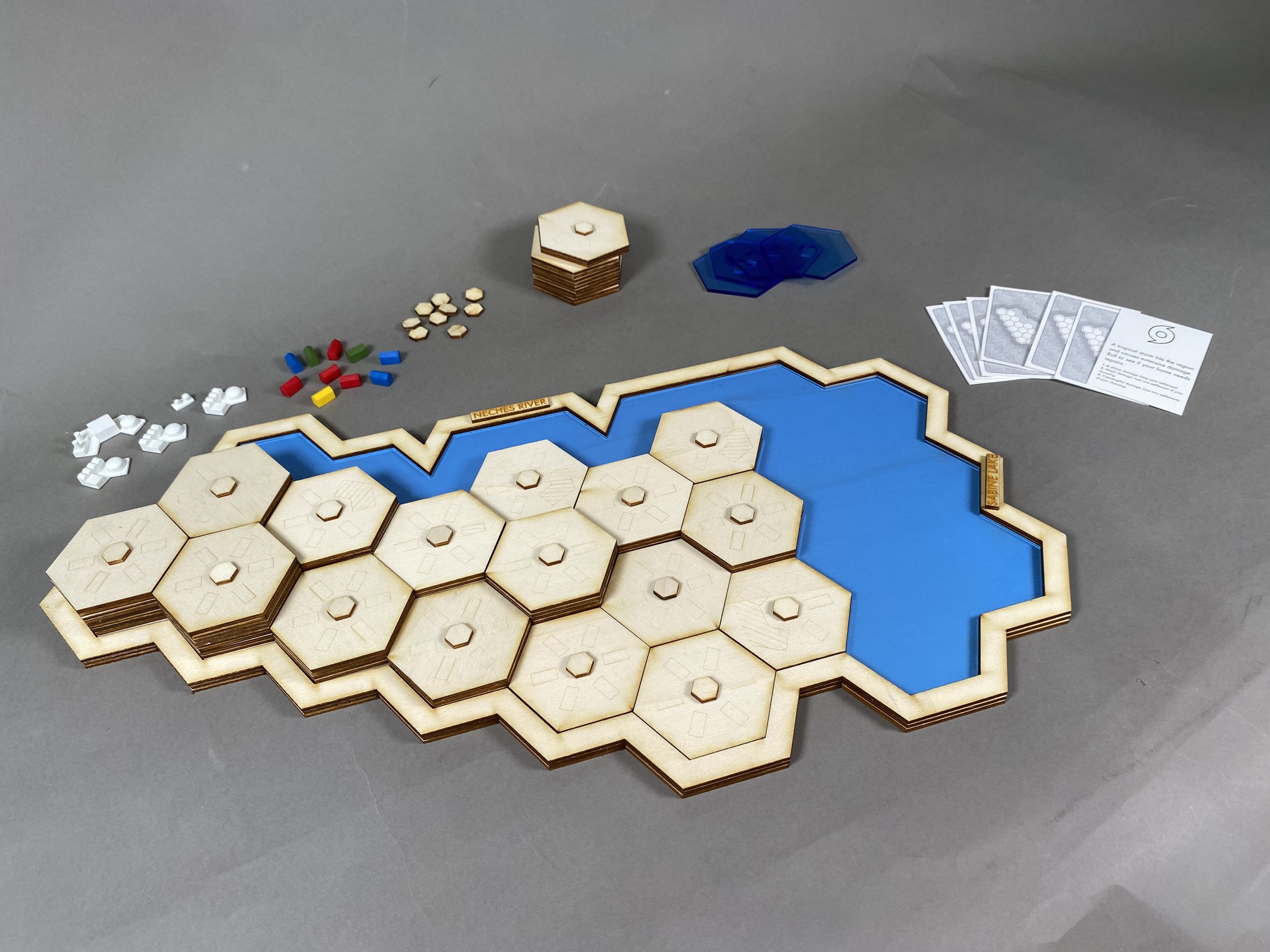
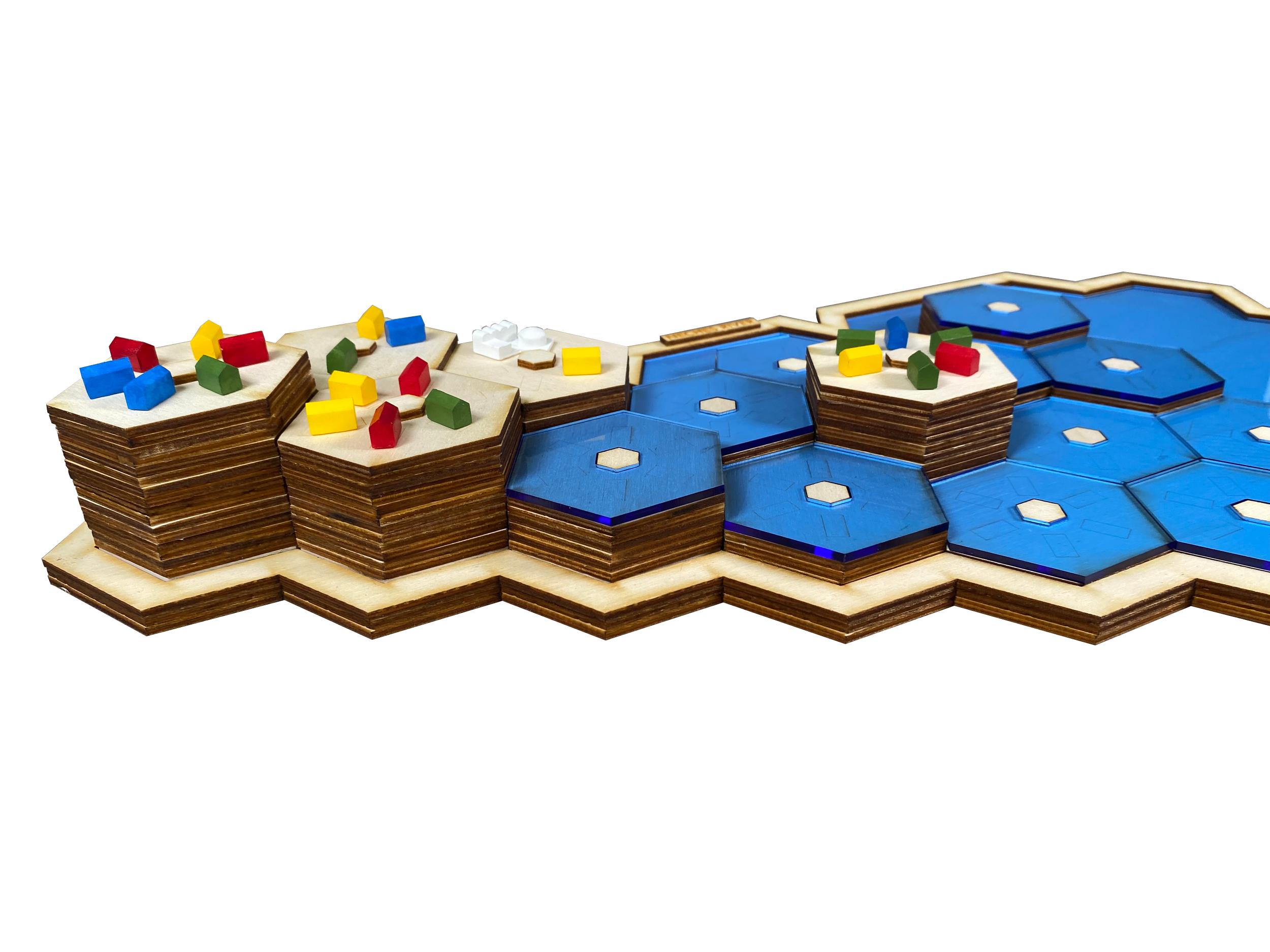
Today, Port Arthur and Orange County are investing over $3 billion in gray infrastructure upgrades, costs that largely protect the petroleum industry rather than the communities most vulnerable to flooding. This project argues that such resources could be more effectively deployed through localized, community-scaled strategies. By treating sediment as a critical but mismanaged resource, particularly on the underutilized Pleasure Island, the proposal leverages natural lake currents to form a tidal marsh at Sabine Pass, creating a resilient buffer against storm surge. Dredged sediment from the Intracoastal Waterway is redirected to reinforce neighborhoods at lower risk, selected for their capacity to absorb residents from higher-risk areas. Through a network of cut-and-fill operations at the neighborhood, block, and household scale, the project replaces monolithic infrastructure with redundant, adaptable systems that prioritize long-term resilience and community agency.
Research Studio, 2022
Partner: Cassie Kadish